History

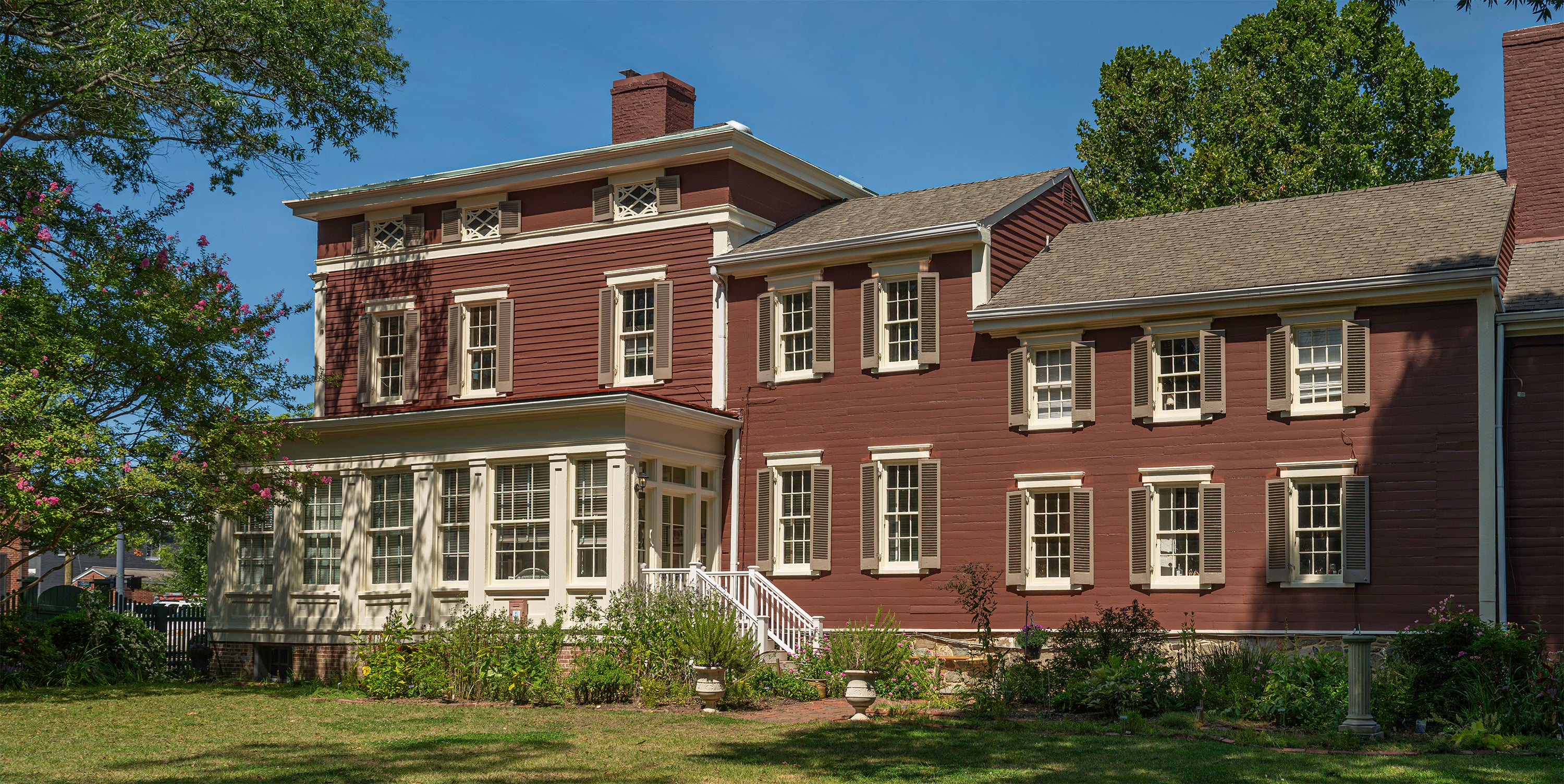
Revolutionary War hero Henry “Light Horse Harry” Lee, father of Confederate General Robert E. Lee, purchased several lots on North Washington Street in Alexandria soon after the War for Independence. He later sold the lot at the corner of Oronoco Street to his cousin Philip Richard Fendall, who built this wood frame house in 1785. From 1785 until 1903, the house served as the home to thirty-seven members of the Lee family. This period of residency was interrupted during the Civil War when, in 1863, the Union Army seized the property for use as a hospital for its wounded soldiers.

History did not come to a halt upon the departure of the last member of the Lee family in 1903. Robert Downham, a prominent Alexandria haberdasher and liquor purveyor, resided with his family in this house for the next 31 years. In 1937, Downham conveyed the house to John L. Lewis. As the president of the United Mine Workers and the founder of the Congress of Industrial Organizations, Lewis is considered one of the most powerful and controversial labor leaders in American history. He lived in this house during the height of his power, and until his death in 1969.

Collections

Restored to its early Victorian elegance, the house is interpreted as a Lee family home of the 1850-1870 period, presenting an intimate study of 19th century family life. Guided by its 1852 inventory, the house is furnished with a splendid collection of Lee family heirlooms as well as period pieces produced by local and regional cabinetmakers and silversmiths.


The Lee-Fendall House Museum exhibits Lee family portraits, and personal items such as jewelry, documents, letters, and books. The collection also contains beautiful decorative pieces handcrafted by Lee ladies. The Lee-Fendall House Museum is pleased to exhibit the largest public collection of furniture manufactured the Green Furniture Company. The Green Family of cabinetmakers operated the largest furniture factory in Alexandria during the 19th century.

Gardens

When Phillip R. Fendall built the mansion, the property needed to meet all the functions of the household. According to the 1796 fire assurance policy, Mr. Fendall filled up the half-acre yard with stables, laundries, a rabbit house, a pigeon house, a two-story wooden dwelling, a warehouse, and his office. Kitchen and ornamental gardens were included, though they were less important to the overall activity of the site than the other buildings. Charming in their own way, they would have done little to improve the appearance of the site. By the Cazenoves’ ownership of Lee-Fendall (1849-70), the needs of city dwellers were a bit different than in the Fendalls’ day. The Industrial Revolution had removed the need for extensive on-site production of foodstuffs or dry goods. The lawn could be turned to more ornamental purposes.


The staff had long suspected the Mr. Cazenove complemented the 1850-52 renovation of the mansion with a full renovation of the yard. An archaeological excavation was funded by the Save America’s Treasures grant program, and conducted by the Louis Berger Group of Washington, DC. Several other organizations and private donors all provided funds for the project. the excavation was startling: Not only did Mr. Cazenove completely overhaul Mr. Fendall’s landscape, the lead archaelogist stated that it was the most complete 19th century urban landscape he had discovered in Alexandria! Read the full garden report here:

Lee Fendall Garden Final Report Part One

Lee-Fendall Garden Final Report Part Two

Lee Fendall Garden Final Report Part Three 

Today, a beautiful award-winning half-acre garden complements the Lee-Fendall House. Development of the garden began in 1974 as a labor of love by the Alexandria Council of Garden Clubs. It is still endowed by that group of 24 garden clubs. A rose garden grows many varieties of heritage roses spanning the years 1842-1893. An herb garden recalls the days when herbs were used for medicine, insect repellents and fragrances as well as flavoring agents. Many of the English boxwoods lining the brick path were nurtured from tiny sprigs saved from traditional boxwood Christmas wreaths. Squirrels, the symbol of the Lee family, scamper across the lawn.

 Trees of particular interest in the garden are the black walnut and the ginkgo—one of the oldest species in the plant kingdom—as well as a magnificent magnolia grandiflora, which was planted circa 1852. Peer beneath the magnolia for a glimpse of the tombstone of Eleanor Fendall (1708-1759), mother of Philip R. Fendall, builder of the Lee-Fendall House — no, there isn’t a grave, the stone was saved from destruction and brought to the property in her memory.

 Interior Restoration

The Lee-Fendall House Museum & Garden embarked in July 2011 on a phased interior restoration project. This initiative focuses on replacing the current interiors with wallpaper, paint, and window hangings appropriate to the 1850-1870 period interpreted by the site.

Using existing paint analysis reports, the Lee-Fendall House Museum & Garden, with generous support from the Historic Alexandria Foundation and the International Furnishings and Design Association, will begin to restore the dining room to its 1850s appearance. Once charged with saving the house from demolition, today the VTHP is committed to implementing an aggressive preservation strategy that will reverse centuries of deferred maintenance, and the potentially catastrophic effects of long term termite damage to primary structural elements, as well as the negative effects of environmental conditions on exterior façades. It is also the goal of the organization to improve access to the building and the overall visitor experience, while preserving and documenting the structure’s important and unique historic features.Since 2005, the focus of the VTHP has been on structural restoration. The main structural beam as well as two sills have been replaced, making the house stable. We have another portion of a sill to replace, which will complete the structural restoration phase. At that point, we will turn our attention to an external restoration, including the siding, paint, and decorative elements.The restoration work that has been completed to date has been the result of generous support from the federal government, the Commonwealth of Virginia, and the City of Alexandria, as well as from numerous private foundations and individuals. The continued support of these groups, and of others, will be necessary to restore the Lee-Fendall House to its 1850s grandeur and elegance.

 To contribute to this restoration effort, please contact us at 703-548-1789.